The Centrifugal Impulse Drive converts electrical power into directional thrust — no fuel, no exhaust, no limits.
Quantum Dynamics Enterprises, Inc™ has built the world's first propellantless magnetic propulsion system. The Centrifugal Impulse Drive (CID™) uses precisely engineered rotating magnetic fields to generate net directional thrust — no propellant loaded, expelled, or depleted. Only sunlight required.
Counter-rotating magnetic assemblies are driven through a precisely tuned stator gap, creating a dynamic asymmetric force environment.
At the stator gap, the magnetic field releases abruptly. At high RPM, the rotor arm cannot fully extend — creating a net force differential that doesn't cancel over a full cycle.
The asymmetry sums into a consistent, repeatable net force in a fixed direction — confirmed independently on torsion balances, water tables, and single-ring tests.
No propellant is consumed. As long as solar panels provide electrical power, CID™ generates thrust — doubling or eliminating satellite lifespan constraints entirely.
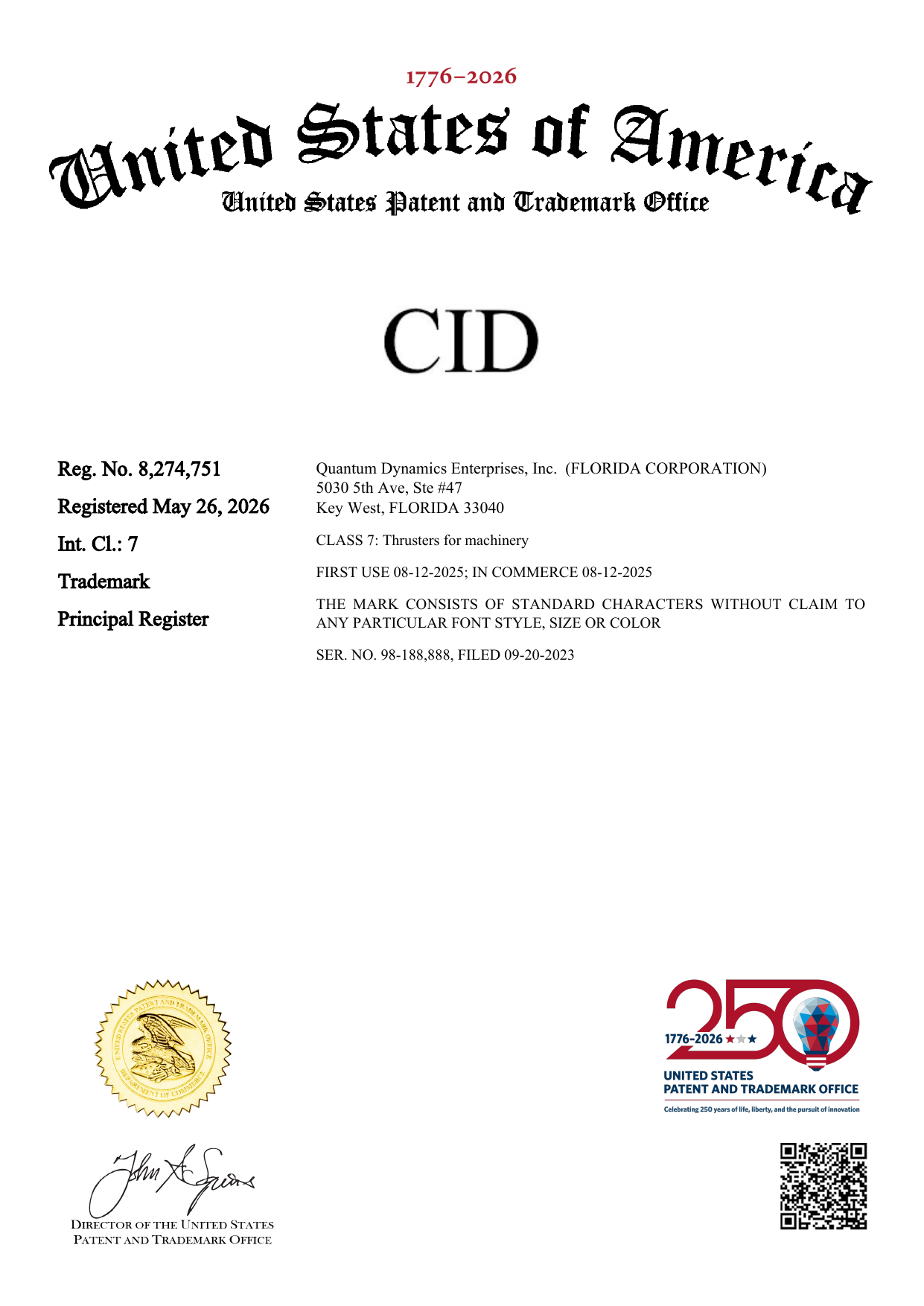
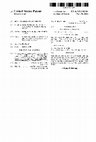
The U.S. Patent and Trademark Office has formally examined, reviewed, and granted protection for CID™ — recognizing the Centrifugal Impulse Drive as a genuine, novel, and non-obvious invention.
No Fuel. Just Mechanical Thrust.
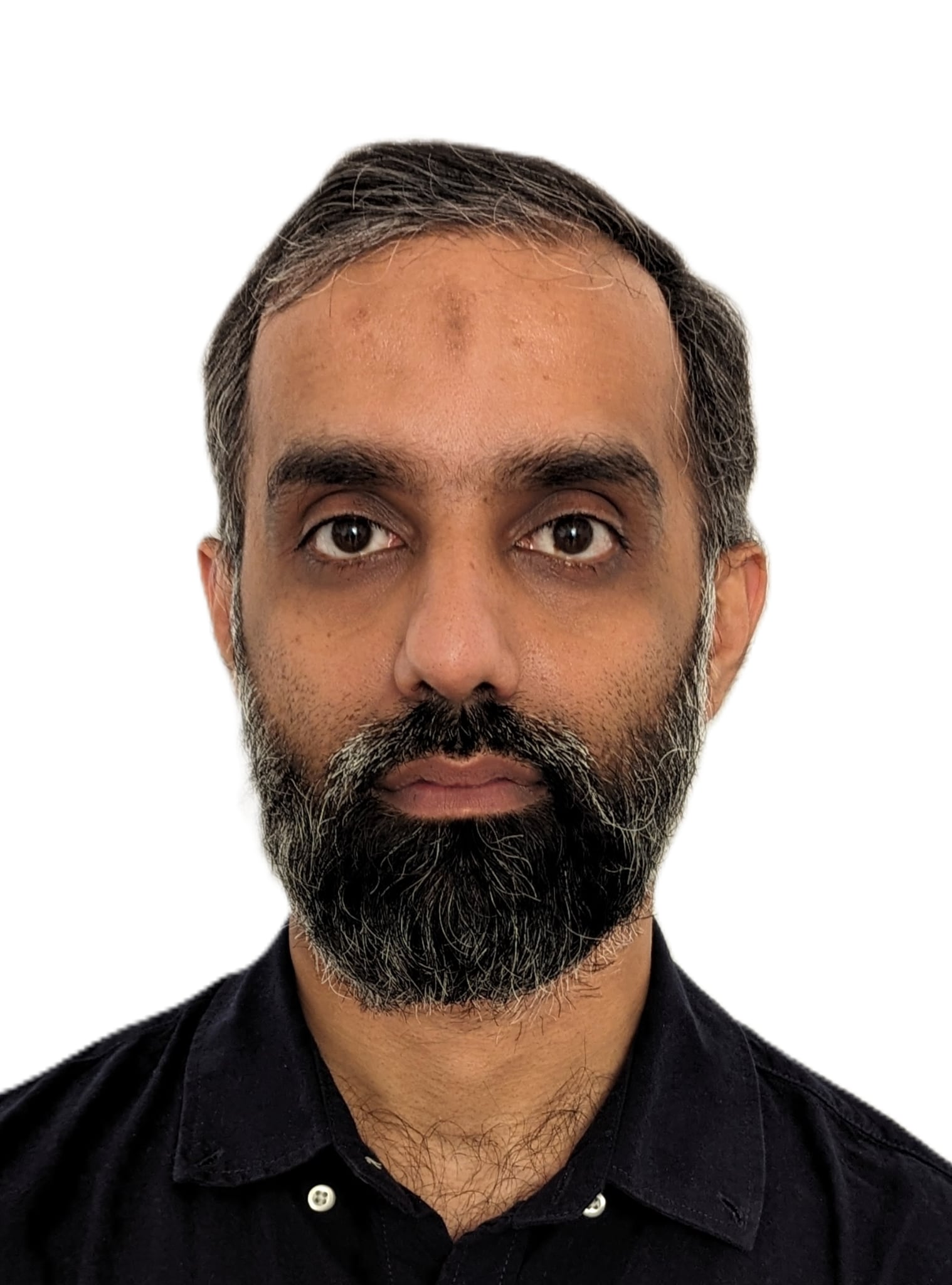
Led by inventor and CEO Harry Sprain, QDE brings together decorated aerospace veterans, defense executives, and satellite industry leaders.
Billions in satellite assets go dark each year when propellant runs out. CID™ changes the equation permanently.
A plain-language breakdown of our most recent controlled test results — what we measured and what it means.
The USPTO has formally recognized CID™. Here's what that means for investors, partners, and the future.
Quantum Dynamics Enterprises is selectively engaging with qualified partners. Get in touch and we'll be in touch with next steps.

All footage below documents controlled, independently observable tests of the Centrifugal Impulse Drive — Faraday cages, remote operation, plexiglass shielding. No YouTube. Clean direct video.
CID™ mounted on a torsion balance, operated fully by remote control inside a Faraday cage. Plexiglass shielding eliminates all airflow. Consistent directional deflection confirmed across every run.
Second independent torsion balance test showing the same consistent directional deflection under identical isolated conditions. Repeatability is the key scientific validation.
3D animation showing the Centrifugal Impulse Drive converting electrical power into thrust through precisely engineered rotating magnetic fields — without expelling any propellant.
CID™ on the Georgia Tech water table. High RPM produces strong directional force. Low RPM produces weaker but consistently directional force — exactly matching centrifugal asymmetry theory.
The original single-ring CID™ prototype tested at Georgia Tech under Dr. Mitchell Walker — the first independent institutional validation of the CID™ propulsion effect.
CID™ on the torsion balance at SpaceCom 2024 in Orlando — demonstrating propellantless propulsion at high RPM with reverse thrust before aerospace industry executives and investors.
Harry Sprain demonstrates CID™ live at the Alternative Propulsion Engineering Conference — before the world's most technically demanding alternative propulsion researchers.
CID™ is a reactionless drive — propulsion not based on the expulsion of fuel or reaction mass. Here is the complete scientific framework, from first principles to test-validated theory.
Rotors counter-rotate through a stator gap. As rotor magnets leave the magnetic field, centrifugal force attempts to extend the rotor arm outward. At high RPM, the arm never fully extends before the opposing magnetic field slams it back — creating an asymmetric centrifugal force profile that does not cancel over a full rotation cycle. This net asymmetry produces directional thrust.
When the rotor arm reaches the stator gap, the constraining magnetic field releases abruptly. The centrifugal force throws the arm outward — but at high RPM, the opposing field engages before full extension. This creates the force differential:
High RPM: Arm extends only partially → strong net force
Low RPM: Arm extends further → weaker net force (but still directional)
Fixed rotors: Zero force measured → confirms rotational dynamics are the source
Opposing magnetic fields act as a non-contact spring — storing and releasing energy while maintaining equilibrium between dynamic forces. In CID™, opposing magnetic fields dampen and balance the centrifugal and centripetal forces on the rotor arm, holding it in place until it reaches the stator gap, where the magnetic field releases and the arm is thrown outward, generating a propulsive impulse.
↓ Download Magnetic Spring Paper (PDF)CID™ uses opposing magnetic fields to balance centrifugal and centripetal forces on the rotor arm. The arm remains in magnetic equilibrium — the opposing fields act as a spring, dampening outward force.
As the rotor approaches the stator gap, magnetic restraint releases. The arm moves outward and generates a directional impulse.
This controlled release of magnetic potential energy converts rotational motion into measurable thrust — without expelling any mass.
The most common objection: "Isn't this just gyroscopic precession?" Gyroscopic precession creates a rotating force that is inherently self-canceling over a full cycle. CID™ produces directional asymmetry that does NOT cancel — proven definitively by zero-thrust control runs. When rotors are mechanically fixed, thrust goes to zero. When rotors spin, thrust appears. The effect is caused by rotational dynamics at the stator gap — not gyroscopic forces, vibration, heat, or electromagnetic interference.
Step 1: Baseline run — rotors fixed, everything else identical. Deflection: zero.
Step 2: Test run — rotors spinning at operating RPM. Deflection: consistent, directional.
Step 3: Return to fixed rotors. Deflection: returns to zero.
This protocol, repeated across multiple test configurations and locations, definitively rules out all alternative force sources. The thrust tracks the rotational motion — nothing else.
The CID™ results are consistent with research by Marc G. Millis, former NASA propulsion physicist and founder of the Breakthrough Propulsion Physics Program. Millis' work explored how mechanical and electromagnetic interactions within a closed system could produce measurable net forces under dynamic conditions — the same principle CID™ demonstrates.
Dr. Robert H. "Bobby" Nichols, Jr. was a physicist, planetary scientist, and educator whose pioneering curiosity extended from isotope cosmochemistry to advanced propulsion physics. He earned his Ph.D. in Physics from Washington University in St. Louis and served as a Senior Research Scientist at the McDonnell Center for the Space Sciences, later teaching physics and engineering at Cumberland University and Young Harris College.
Dr. Nichols published extensively in Geochimica et Cosmochimica Acta and NASA-supported studies on early solar-system materials. In his later years, he explored mechanical, propellantless propulsion concepts, producing the original Nichols Project Description (2011) that helped inspire and inform the continued research that became CID™.
He is remembered not only for his deep scientific insight but for his generosity, humor, and devotion to exploring ideas far ahead of their time.
↓ Download Nichols Project Description (PDF)Every CID™ test has been specifically designed to rule out alternative explanations. The protocol is rigorous, repeatable, and independently observable.
Multiple torsion balance setups show consistent directional deflection when CID™ is powered — and zero deflection when rotors are fixed. The gold standard for force measurement.
Tests run inside Faraday enclosures with remote-controlled operation. All external electromagnetic fields are shielded, eliminating EM interference as a cause of measured force.
Four years of independent testing at Georgia Tech Research Corporation under Dr. Mitchell Walker of the Daniel Guggenheim School of Aerospace Engineering.
When rotors are mechanically fixed, zero thrust is measured. Confirms that propulsion arises exclusively from rotational dynamics — not vibration, heat, or static EM fields.
All torsion balance tests enclosed under plexiglass shielding. Airflow or wind interference as a source of the measured force is completely ruled out.
Results consistent with Marc G. Millis' Breakthrough Propulsion Physics Program research on closed-system net force production under dynamic conditions.
Tested at Georgia Tech water table in 2023. High RPM produces strong directional force; low RPM produces weaker but consistently directional force — matching theoretical predictions.
All controls handled remotely — completely hands-off start. Eliminates any possibility of operator physical interference affecting test outcomes.
The directional deflection is repeatable across multiple independent test runs, different operators, different apparatus configurations, and different locations.
Satellite Station-Keeping
Replaces propellant-based thrusters on GEO and LEO satellites — extending operational lifespan from years to decades, or indefinitely.
Dead Satellite Recovery
Billions in satellite assets go dark when propellant runs out. A CID™-equipped rescue vehicle could recover and reposition them.
ISS Orbit Maintenance
CID™ could maintain the International Space Station's orbital altitude without periodic propellant resupply missions.
Deep Space Missions
No propellant mass at launch means dramatically increased payload capacity for deep space exploration.
Debris Removal
CID™ vehicles could shepherd debris to controlled reentry without propellant constraints limiting operational range.
Constellation Management
Maintain precise orbital slots in large satellite constellations indefinitely — powered only by sunlight.
Quantum Dynamics Enterprises brings together a decorated inventor, veteran aerospace executives, and defense industry leaders united by a shared belief in the future of propellantless propulsion.
Harry Sprain is the founder, CEO, and CTO of Quantum Dynamics Enterprises, Inc™ and the inventor of the Centrifugal Impulse Drive (CID™). He has been in the research and development field for over 30 years, with his first commercial invention being a unique and effective environmentally safe insecticide that became the basis for EcoSmart Technologies.
That technology has spawned over 40 U.S. patents (10 issued) and numerous international patents across agriculture, commercial, pharmaceutical, and retail industries. Harry won "Inventor of the Year" from the U.S. Society of Inventors, received "Best New Product for 2000" recognition, and garnered press in Time magazine and Business Week.
Quantum Dynamics Enterprises was formed in Florida in 2010. Harry has led the company through four years of independent testing at Georgia Tech, the development of multiple CID™ prototypes, and the successful prosecution of U.S. Patent 12,424,887 — covering the full apparatus and process of the Centrifugal Impulse Drive.
Andrew D. "Andy" Heaton is a veteran technology executive with over 20 years of experience across five continents. As Co-Founder and CEO of Tekniam, LLC, he leads an elite team of DoD and Intelligence Community professionals developing mission-critical communications and Counter-UAS technologies.
He is the co-inventor of the Remote Universal Communications System (RUCS), a portable broadband solution for military missions, disaster relief, and first responders. He serves as Strategic Advisor to Complete Aerospace Solutions (CAEROS) and has integrated Rivada Space Networks' "OuterNET" LEO constellation into Tekniam's global connectivity systems.
Beyond his executive achievements, Heaton is a highly decorated athlete in the Highland Games — a two-time National Caber Champion and world record holder in the keg toss.
LinkedIn ↗F. Brent Abbott is a veteran aerospace executive with more than 25 years of experience in commercial space, satellite systems, business development, and strategic market expansion.
Over the course of his career, he has held senior leadership roles including Executive Vice President and Chief Revenue Officer at Rogue Space Systems Corporation, CEO of Kongsberg NanoAvionics U.S., CEO of ÅAC Microtec U.S., Head of Business Development for Surrey Satellite Technology U.S., and Business Development Manager at Honeywell Aerospace.
He holds a B.S. in Electrical Engineering from Iowa State University. Brent currently consults with Quantum Dynamics Enterprises, supporting the company's strategic growth, partnerships, and commercialization efforts.
LinkedIn ↗Jeff Gossel retired from the United States Intelligence Community as a Senior National Intelligence Service member, concluding his career as Technical Director for Space and Missiles at the National Air and Space Intelligence Center — a Senior Executive Service member for his final ten years.
He played significant roles in standing up the U.S. Space Force, U.S. Space Command, and National Space Intelligence Center. His portfolio covered space domain awareness, foreign spacecraft, counter-space systems, hypersonic vehicles, and ballistic missiles. Jeff sits on the Board of Advisors for the National Security Space Association.
Official Biography ↗Dr. Shakeeb Bin Hasan is a computational physicist specializing in advanced electromagnetics and multiphysics simulations. He holds a PhD in Physics from Friedrich-Schiller-Universität Jena, Germany, and an MSc in Optics from Delft University of Technology, Netherlands.
With over 10 years of deep-tech experience, his expertise includes finite-element modeling (FEniCSx and COMSOL Multiphysics), electromagnetic and multiphysics problems, and semiconductor metrology. Dr. Hasan completed a comprehensive 21-page FEM modeling study for QDE on CID™ — coupling magnetic forces with centrifugal dynamics to predict thrust performance. Co-author of peer-reviewed publications (h-index >12) and co-inventor on multiple patent applications.
View CID™ Modeling Study ↗Dr. Nichols was a physicist, planetary scientist, and educator whose pioneering curiosity extended from isotope cosmochemistry to propellantless propulsion. His 2011 Nichols Project Description provided the theoretical inspiration that helped shape the early development of CID™. He is remembered for his scientific insight, generosity, and commitment to exploring ideas far ahead of their time.
↓ Nichols Project Description (PDF)Direct from Harry Sprain and the QDE research team — technical breakdowns, test analyses, and company updates.
Billions in satellite assets go dark each year. CID™ changes the equation permanently.
A plain-language breakdown of our most recent controlled test results and what the data means.
What happened when we brought CID™ to the industry's biggest space conference of the year.
The most common misconception — and the test data that definitively rules it out.
Summary of Harry Sprain's live interview and CID™ demonstration at APEC December 2024.
The USPTO has formally recognized CID™. Here's what that means for everyone.
Ask questions, share research, connect directly with Harry Sprain and the QDE team. Researchers, engineers, fans, and investors all welcome.
Quantum Dynamics Enterprises is selectively engaging with qualified partners. If you are interested in learning more about CID™, please submit your contact information and we will be in touch.
This form does not constitute an offer or solicitation of securities. Submission of this form creates no obligation on the part of Quantum Dynamics Enterprises, Inc™. Qualified opportunities are discussed privately.
January 30–February 1, 2024 · Orange County Convention Center · Orlando, Florida. Quantum Dynamics Enterprises demonstrated CID™ live on the torsion balance before aerospace executives, satellite operators, defense contractors, and investors — the largest commercial space conference in the world.
CID™ at high RPM with reverse thrust. Rotors turn in opposite directions. As the rotor magnet leaves the magnetic field, centrifugal force tries to throw the magnet out — but at high RPM it never fully extends before the opposing magnetic field slams it back into the rotor housing. This asymmetry creates net directional thrust.
CID™ mounted on a torsion balance, demonstrating propellantless propulsion live at SpaceCom 2024 before an audience of aerospace industry leaders. Consistent directional deflection measured and observed in real time.
SpaceCom is the global commercial space conference — the premier gathering of satellite operators, launch providers, defense contractors, and investors. QDE's live CID™ demonstration at SpaceCom 2024 marked the technology's formal introduction to the aerospace industry.
QDE is actively seeking investors, licensing partners, and co-development agreements following SpaceCom 2024.